
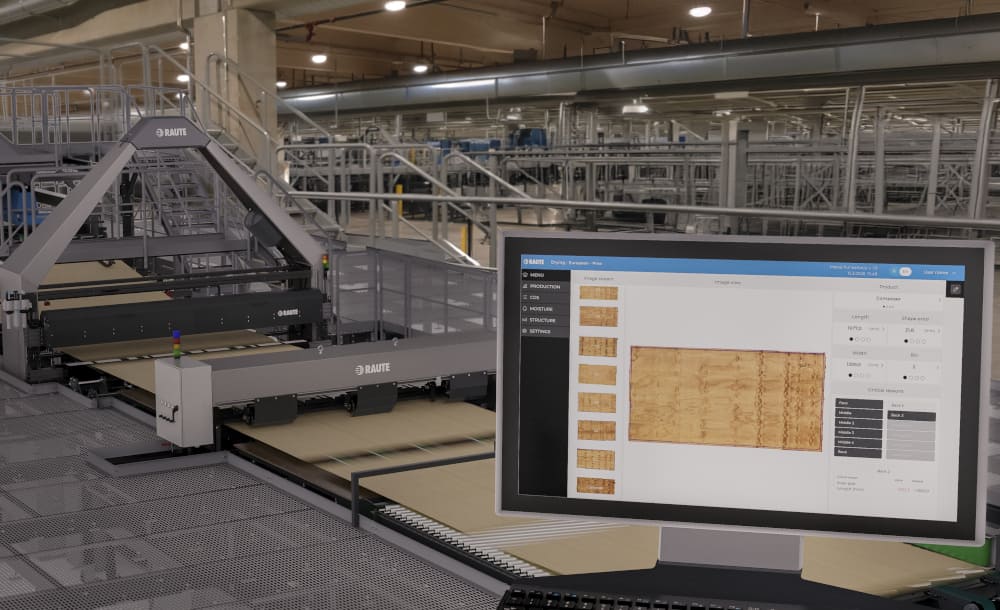
Raute has integrated AI-driven defect detection into live manufacturing setups, refining how veneer, plywood, and LVL lines evaluate and process raw wood. This technology allows facilities to make faster, more stable manufacturing choices, ultimately boosting material recovery, minimizing scrap, and lowering energy consumption.
In the engineered wood sector, precise defect identification dictates how effectively raw logs are utilized. It directly governs grading, cutting, patching, and sorting actions across the assembly line. Flawed or variable detection results in costly material waste, lower yield rates, and excessive energy drain in later manufacturing phases.
Raute’s industrial scanning systems evaluate, grade, and sort veneer sheets and panels during various manufacturing steps. These tools deliver immediate quality analytics to guide operational choices in real time. By merging optical flaw detection with physical metrics like moisture levels and structural strength, the scanners establish a reliable framework for data-driven, automated workflows.
Artificial intelligence elevates these scanning capabilities. By pairing industrial cameras with deep learning networks tailored for the engineered wood industry, the systems recognize flaws with high consistency across diverse wood species, surface textures, and factory environments. The technology maps out exact defect locations on every sheet, ensuring highly accurate and repeatable sorting decisions.
The need for advanced scanning is rising as factories process a more diverse range of timber. Raute’s AI defect detection leverages half a century of hardware development and deep expertise handling over 50 distinct wood species globally. This extensive background ensures reliable performance on both standard logs and alternative raw materials.
“More variable raw materials mean that mistakes made early in the process become increasingly costly later on,” says Markus Sirviö, responsible for analyzer business development at Raute. “When detection becomes more consistent, mills can improve recovery and avoid inefficiencies that would otherwise carry through the entire production process.”
Raute analyzers can be applied at multiple points in production, including green veneer inspection after peeling, dry veneer grading after drying, and panel repairing and grading. Early‑stage defect detection is particularly important, as it helps prevent low‑quality material from entering energy‑intensive processes such as drying and hot pressing.
As engineered wood producers work to improve efficiency with increasingly variable raw materials, AI‑enhanced analyzers are becoming an established part of production. Their role is shifting from inspection to enabling consistent, data‑driven decision‑making across the production process.