
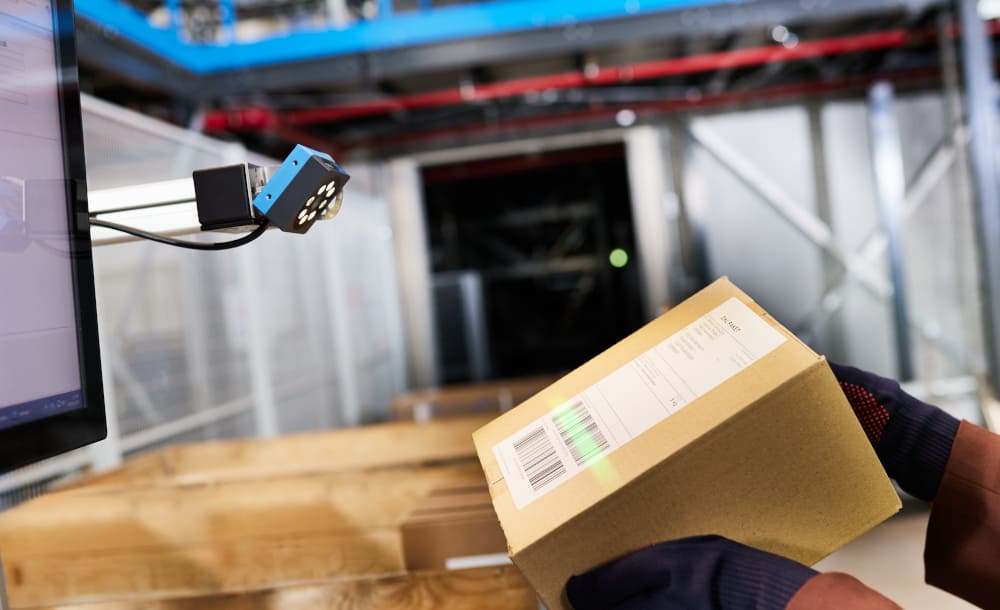
Scanning a barcode shouldn’t be any harder than swiping an item at the checkout or dropping off a package at a courier point. That’s the philosophy behind SICK’s new sensingCam SEC200, an image-based code reader built for logistics and industrial settings. It gives operators a dependable way to identify both 1D and 2D codes, keeping workflows uninterrupted and cutting down on unnecessary downtime. Compact, tough and budget-friendly, the SEC200 adds a practical, everyday identification tool to SICK’s growing lineup.
From the first setup to daily use, the SEC200 was engineered to keep things simple. It pairs solid identification performance with a durable build and clear operator guidance — all in one small unit. A built-in web interface, standard industrial connectivity options, and intuitive light and sound feedback come together to make configuration faster, commissioning smoother, and everyday use on the production floor more predictable.
Consistent scanning, steady operations
At the heart of the device sits a 1.3-megapixel camera capable of picking up 1D and 2D codes from 100 to 300 mm away, no matter how the code is angled or rotated. Operators get instant confirmation through a green LED and a beep once a code is successfully scanned — a small detail that makes a big difference at manual pick stations or assembly lines, where ease of use shortens training time and builds operator confidence in the tool. On top of that, an IP65-rated housing keeps dust, splashing water and physical knocks from affecting performance, so the reader keeps working reliably even in tougher shop-floor conditions.
Fast installation, straightforward integration
Getting the SEC200 up and running doesn’t take long. Pre-configured mounting hardware, a built-in alignment LED, and browser-based setup through the device’s own web server mean no extra software is needed to get started. Standard Ethernet and USB ports make it easy to plug into whatever automation or IT setup is already in place, cutting commissioning time significantly. When multiple units need to be deployed — say, across a larger production line — a cloning feature lets teams copy configurations from one device to the next, keeping settings consistent, avoiding manual setup mistakes, and saving hours of installation work.
Security built in from day one
As more industrial equipment becomes networked, cybersecurity has moved from a nice-to-have to a core requirement for long-term reliability. Starting 11 December 2027, the EU’s Cyber Resilience Act (CRA) will require stronger security safeguards for any product that handles or transmits digital data. SICK has been factoring cybersecurity into product development for years, following established, standards-based practices for data protection.
The SEC200 is no exception: as a newly launched connected device, it was built through a CRA-aligned development process, giving customers assurance that strong data security was part of the design from the very start.