
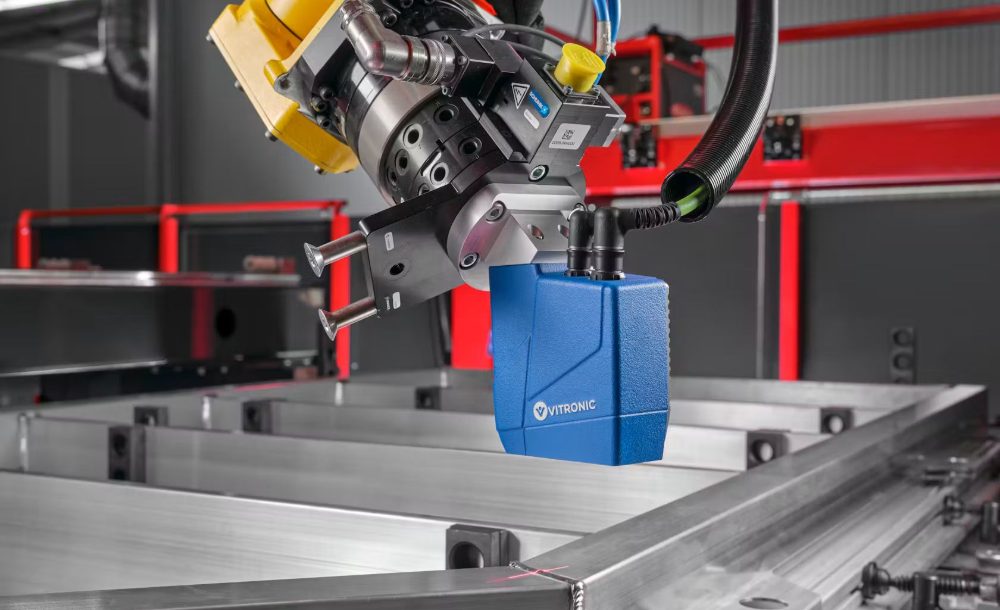
LMI Technologies has completed the acquisition of the Weld Seam Inspection (WSI) business of VITRONIC. With the deal closed, WSI joins the machine vision business of TKH Group, the parent company of LMI. As a result, LMI adds turnkey weld inspection systems for automotive manufacturing and heavy industry to its 3D sensing portfolio.
What LMI gains with VITRONIC WSI
For decades, automotive OEMs and Tier 1 suppliers have used VITRONIC WSI for non-destructive inline inspection of safety-critical welds. The systems also provide traceability for every inspected seam. Now LMI takes over the technology, the specialist team and the existing customer relationships.
In return, WSI gains access to a wider technology base and to an international sales and support organisation. In addition, it moves into a group where machine vision and industrial inspection are core activities.
The WSI portfolio
- VIRO WSI with VICT-10, VICT-30 and VICT-40 sensors: automated 3D inline weld seam inspection at production speed. The system measures weld width, reinforcement, throat thickness, toe angle and gap. It also detects surface defects such as pores, spatter and undercut.
- Weldloop: software that links optical 3D measurements with welding process data. Thus, users can see how welding parameters affect seam quality.
- WSI Visualization: an operator interface that shows results, locates defects and supports rework, scrap and release decisions at manual rework stations.
- AI-supported inspection: existing AI functions form the basis for further defect classification work. Planned additions include more deep learning features and WSI Web for central monitoring and historical quality statistics.
Typical applications include EV battery structures, body-in-white, and axle and powertrain components.
Continuity for existing users
LMI now takes responsibility for ongoing projects, service commitments and support. Moreover, WSI engineers, product and project managers and service specialists are moving to LMI. The two teams are coordinating a phased transition.
Existing VIRO WSI systems, VICT sensors, software and service agreements will remain supported. Current product names will also stay in use during the first integration phase. Meanwhile, detailed product information stays on the VITRONIC website until resources move to lmi3d.com.
Next steps: AI, Gocator and global support
LMI has outlined three areas for future development:
- stronger service and technical support through its international organisation,
- better defect detection and quality analytics by combining welding know-how with LMI 3D sensing and software,
- possible integration with Gocator sensors and the GoPxL and GoFactory software platforms.
According to LMI CEO Mark Radford, the deal combines proven inspection technology and application know-how with LMI’s own 3D and software expertise. These initiatives will be introduced step by step as development progresses. Customers can find an FAQ and contact details on the LMI welcome page for VITRONIC WSI.
Why it matters for production engineers
Weld quality is a key safety and cost factor in car bodies and battery housings. Inline 3D inspection replaces random destructive tests and helps cut rework. However, buyers of such systems usually worry about long-term support after a change of ownership. Therefore, the commitment to keep existing systems and the expert team is the most relevant point for current users.
For more news on the company, see all LMI Technologies news, the launch of the Gocator 2D smart cameras and earlier VITRONIC news.