
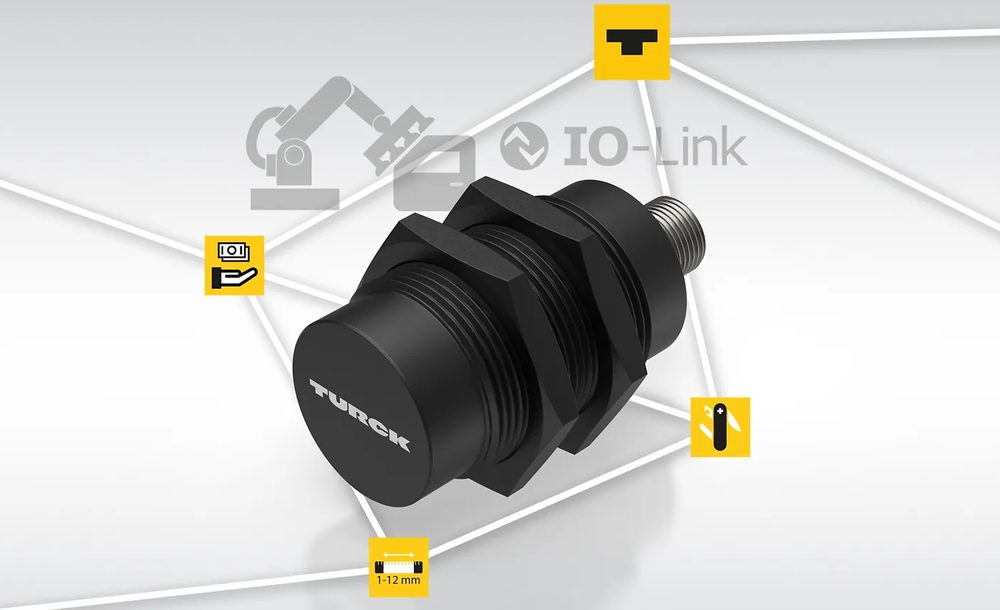
Turck has introduced the NI5DS, an inductive sensor that detects double sheets from one side only. As a result, press shops and body shops no longer need a separate inspection station. The sensor connects via IO-Link and needs no external evaluation unit.
Why double sheets are a problem
In press lines, two sheets sometimes stick together and enter the tool at the same time. This can damage the press or the die. Moreover, a double sheet in a load-bearing body structure can turn a whole vehicle into scrap. For this reason, sheet handling usually includes a double-sheet check.
Many plants carry each sheet to an extra inspection station with a robot. However, that step adds cycle time. The NI5DS checks the sheet from one side, so the check can take place where the sheet already is.
How the NI5DS works
The sensor detects all types of metal. In addition, users can adapt it to different materials and sheet thicknesses. It comes with 15 preinstalled material configurations, and Turck keeps a database with further materials.
Setup runs through the IODD. First, the user selects the material and the sheet thickness. Then they set the switching thresholds. Two programmable outputs report a single sheet and a double sheet. Furthermore, the outputs can work as normally open or normally closed. The process data also includes the raw measured values, so the PLC can log or analyze them.
Technical specifications
- Type: NI5DS-EG30F-IOL8X-H1141/S3709
- Principle: inductive, single-sided double-sheet detection
- Detection range: 1 to 12 mm (3 to 5 mm recommended)
- Materials: all metals; 15 preinstalled material configurations
- Interface: IO-Link, works with any IO-Link master
- Outputs: 2 programmable switching outputs (single sheet / double sheet), NO or NC
- Process data: includes raw measured values
- Housing: M30 stainless steel tube with ceramic coating against welding spatter
Typical applications
Turck targets press shops and body shops in the automotive industry. In addition, press manufacturers and metalworking companies can use the sensor wherever they destack or feed sheets. Because it needs access from one side only, it also fits tight installation spaces.
Why it matters for engineers
Classic double-sheet systems often need an extra evaluation unit and a dedicated station. In contrast, the NI5DS moves the check into the existing handling step. Consequently, robots no longer travel to a test station, and the cycle gets shorter. Thanks to IO-Link, a format change only means loading new parameters. Also, the raw values in the process data let the PLC track trends over time. Finally, the ceramic coating helps the sensor survive in welding areas.
For more details, see the Turck product news and the NI5DS product page. You can also read about Turck’s inductive IO-Link sensors with analog output and more news in our Turck section.