
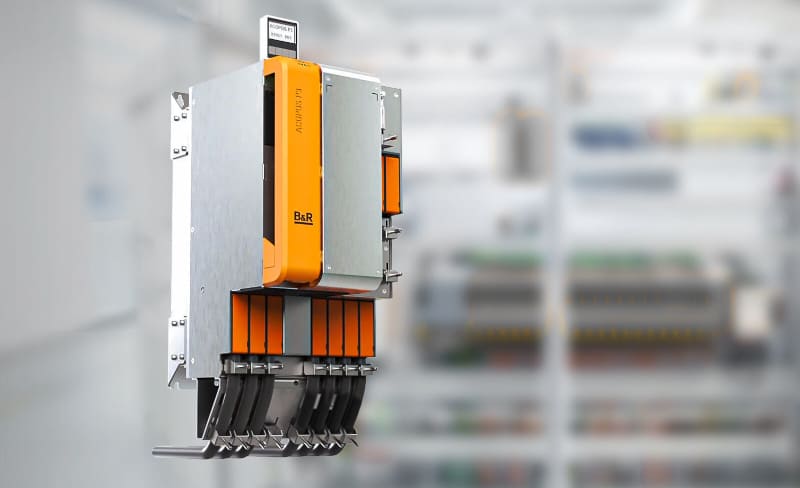
ACOPOS P3 features a power range boost of up to 60% and delivers 8 times the computing power while maintaining the same frame size, making it B&R’s most power-dense servo drives so far.
B&R has improved its ACOPOS P3 series, positioning it as one of the market’s most robust servo drives regarding absolute computational capability and power density. The drive is specifically engineered for OEMs catering to sectors like plastics, printing, paper, textiles, and metal. The ACOPOS P3 series provides improved energy efficiency, incorporates sophisticated intelligent features, and offers streamlined, effective wiring options, facilitating the creation of high-performance machinery in a notably small size. The initiative assists OEM clients aiming at these markets and others in securing a notable competitive edge by facilitating quicker production rates and improved final product quality.
The update enhances the power scalability of the ACOPOS P3 series, introducing seven new devices that include single- and double-axis options with power ratings from 32-80 kW. Along with expanding the range from two to seven, the double-axis module provides twice the power density compared to earlier versions, delivering improved options, versatility, and power scalability for equipment
Upgrades to the drive’s computational power improve responsiveness, resulting in a 50 µs cycle time for all position and speed loops. Advanced intelligent functions can be executed directly within the servo drive, which can operate independently and without being affected by network communication delays or PLC computing performance. This contributes to increased speed and productivity, better final product quality, and improved performance.
A redesigned airflow system, along with coated PCBs, ensure that the drive is robust against external conditions, with dust and other particles present in ambient air circulated away from critical components. Comprehensive thermal monitoring through 17 integrated sensors, allowing the system to operate safely at its performance limits and reducing the need for costly drive oversizing.